13.10.2026
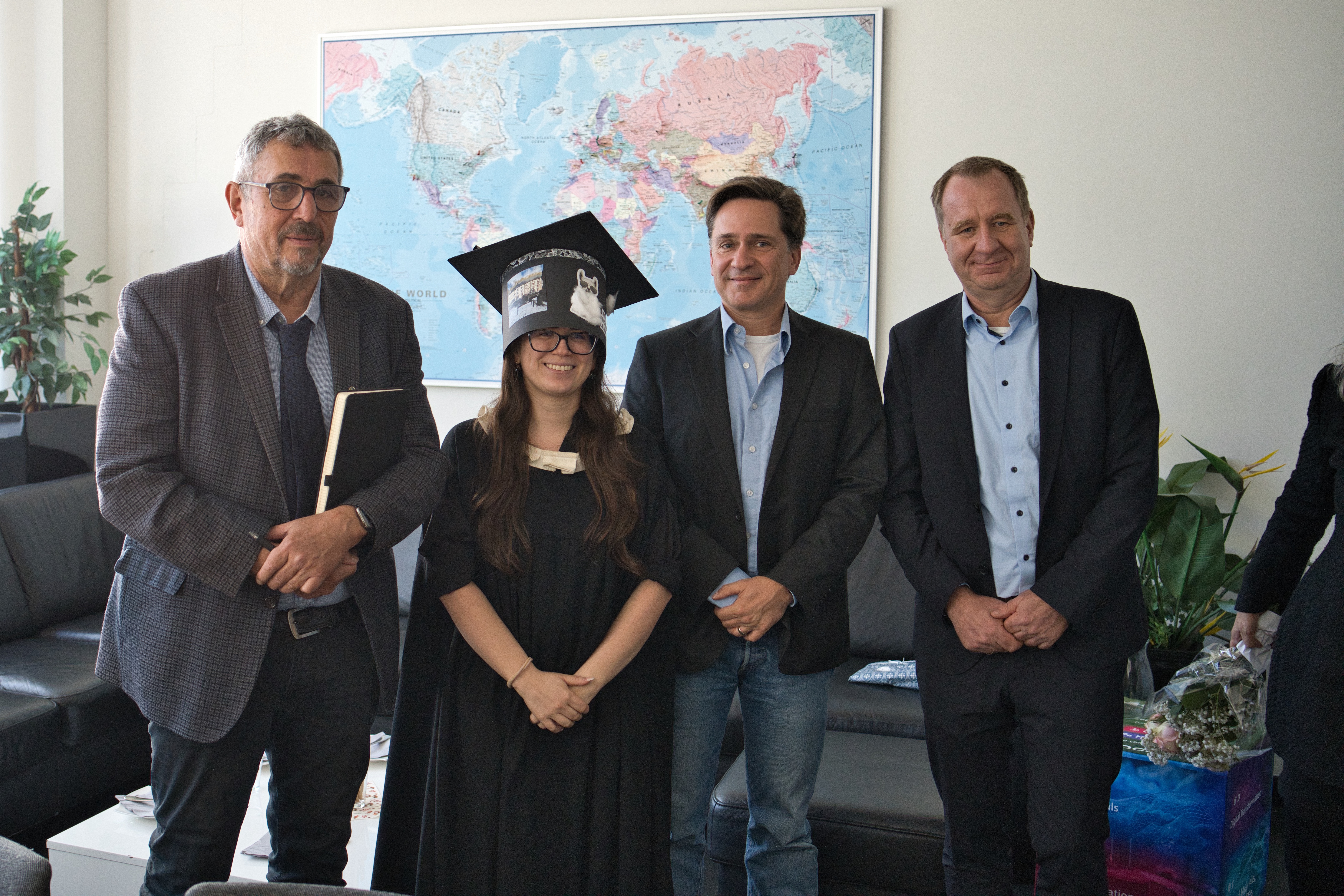
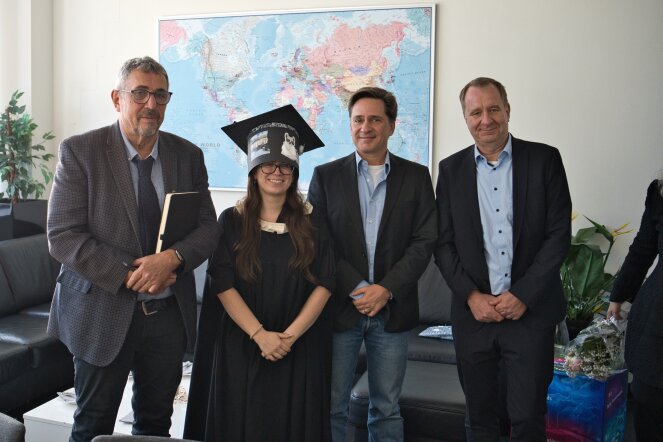
On October 7, 2026, Sara Catalina Pineda Heresi successfully defended her doctoral thesis entitled “High-temperature Ni- and Fe-alloy powders for additive manufacturing”. The work focused on better understanding the processability of two different high-temperature materials through additive manufacturing and facilitating their practical application. This is, for example, technologically highly relevant for the repair of high-temperature components. In the case of a Ni-based superalloy, an adjustment of the alloy composition based on thermodynamic calculations was successfully implemented.
This adjustment aimed to reduce the formation of phases associated with the formation of hot cracks during laser-based additive manufacturing. In the case of a second material, an oxide dispersion strengthened (ODS) iron-based alloy, in-depth microstructural investigations of the powders and the additively manufactured material states were conducted. The goal was to capture the strengthening effect of oxide nanoparticles. The dissertation was supervised by Gunther Eggeler and Jan Frenzel.
On October 7, 2026, Sara Catalina Pineda Heresi successfully defended her doctoral thesis entitled “High-temperature Ni- and Fe-alloy powders for additive manufacturing”. The work focused on better understanding the processability of two different high-temperature materials through additive manufacturing and facilitating their practical application. This is, for example, technologically highly relevant for the repair of high-temperature components. In the case of a Ni-based superalloy, an adjustment of the alloy composition based on thermodynamic calculations was successfully implemented.
This adjustment aimed to reduce the formation of phases associated with the formation of hot cracks during laser-based additive manufacturing. In the case of a second material, an oxide dispersion strengthened (ODS) iron-based alloy, in-depth microstructural investigations of the powders and the additively manufactured material states were conducted. The goal was to capture the strengthening effect of oxide nanoparticles. The dissertation was supervised by Gunther Eggeler and Jan Frenzel.
Copyright © LWW 2026
Last update: Oct 13, 2026